The Aftermath of the June Rebellion

The June rebellion is what the story of Les Miserables is based on and since Les Miserables tells the story of the middle of the battle I wanted to cover the aftermath and real-life tragedy.

Before we talk about what happened after the rebellion we need to talk about the events leading up to the battle. The year is 1789, France had just overthrown the monarchy in the French Revolution and the king was dead. Louis XVIII being the next in the line of power didn’t keep it for very long as he was almost immediately usurped by Napoleon. This caused a chain reaction that went down the royal family tree, jumping from ruler to ruler, and finally ending at Charles X who according to the article in “This Day Then” “ruled for 6 years before being elbowed out in the July Revolution of 1830”.

Louis and Charles returned France to a state of disrepair and caused other world powers to cause France to be “restored” and caused power to be thrown around causing general chaos and made Charles an enemy of the people. Then after years of poor leadership “in late July, Charles made his final error, announcing he himself would govern by ordinances while suspending the liberty of the press. The people of France were utterly disgusted, journalists gathered in Paris in protest and over the course of 3 dramatic days, Charles was overthrown, forced to abdicate in favor of his grandson, the 9-year-old Henri. Louis Philippe” but the Duke of Orleans disregarded this and became ruler promising to make a middle ground between no power of the monarchy and total rule by the monarchy.

After everything, the French were put through they were still left with a monarchy they didn’t really want but exorbitantly better than when Charles had ruled. This just goes to show even something as small as the June Rebellion can cause even the most powerful people eventually fall.

The Backstories of Javert and Eponine

Eponine image link

In today’s blog, I will be going over some other major characters from Les Miserables, such as Javert, the law-abiding officer and nemesis of Jean Valjean, and Eponine the scrappy, street-wise daughter of the Thenardiers with a love for Marius.

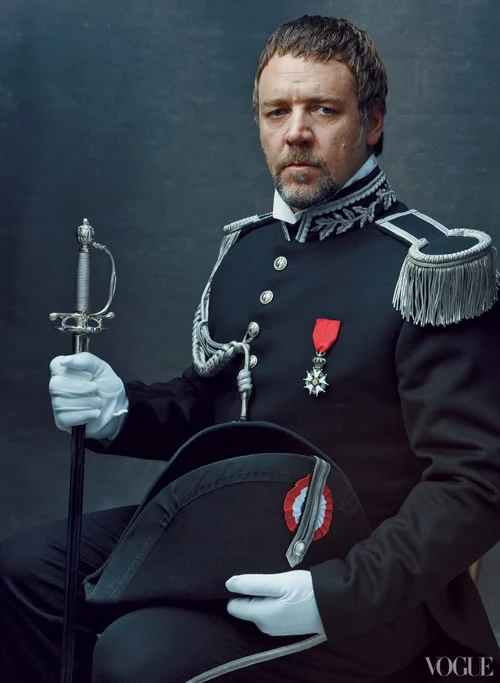
I’ll begin with the character of Javert. He was born in a prison to criminal parents and grew up on the streets until he became a prison guard in Toulon. This is where he first met Jean Valjean and began his lifelong quest to see him punished. Through the years he grows in rank and becomes an inspector, serving under the mayor Monsieur Madeleine, who was Jean Valjean in disguise. At the docks, Javert arrests Fantine for attacking a bourgeois man named Bamatabois. But before Javert could lock her up Valjean, in disguise as the mayor, decides to help Fantine by bringing her to the hospital. Later, Jean Valjean lifts a cart to help a villager who was trapped. Since Javert knew of only one man with that kind of strength, Jean Valjean, he begins to suspect that this mayor is not who he claims to be. A few days later a report comes in that Jean Valjean had been caught. Soon after, Jean Valjean revealed to the court that he was the real Jean Valjean and escapes again. Javert continues to hunt Valjean, who has escaped again, for the rest of his life. Much later in life, when Valjean has the chance to overtake Javert, Valjean shows him mercy and lets him go. This causes a huge crisis of character for Javert, who has spent a lifetime seeing things in black and white, right or wrong. As Javert begins to realize that people can be both bad AND good, he can no longer cope with such a change in his way of thinking and he chooses to end his life, rather than face a world that is “upside down” and “inside out.”

Next, I will discuss the character of Eponine Thenardier. She is introduced to the show as a child. When she was young she wore very nice dresses and lived with her parents and their ward, Cosette, whom she made fun of along with her mother and father. Once Jean Valjean takes Cosette away to raise her, the Thenardier business goes bankrupt and they become poor. Eponine appears later in the story, but this time she is ragged, poor, and dirty, yet street smart. After meeting, she falls in love with Marius, a rich school boy, and they become fast friends. One day, while in the streets, Jean Valjean and Cosette are pulled away by the Thenardiers and Eponine discovers Cosette. Marius encounters Cosette as well and basically falls in love with Cosette at first sight. After the street altercation, Marius asks Eponine to find Cosette, because he is in love with her. Eponine does so begrudgingly. Later after his first visit to Cosette, Marius asks Eponine to deliver a letter to Cosette. She then takes it to Cosette’s home to be confronted by Valjean who says he will deliver the letter to Cosette. At that point Eponine realizes her love for Marius is one sided, causing her to sing her iconic song, “On My Own.”Eponine then goes to Marius at the barricade where she takes a bullet for Marius and ends up dying in his arms, at last able to feel that he cares for her.

The backstories of Jean Valjean, Cosette, and Marius

Valjean, Cosette, and Marius

The characters in the much-loved story of Les Miserables are not your average townsfolk. From Jean Valjean, the elusive parole-breaking main character to the grimy and stingy Thénardiers, each character has their backstories and secrets that make the characters do what they do.

Starting out with the more major characters, Jean Valjean was a man who was born into poverty whose parents died at a very young age, leaving him, his older sister, and her eight children alone in the world. As the man of his house, he felt responsible for all of them. When his family was starving and didn’t have any food, he broke into a bakery to steal a loaf of bread which landed him with five years of jail time. Those five years eventually turned into 19 years because of his frequent attempts to escape. Once he left prison on parole, he had to take a yellow ticket to show people his crimes and mark him for a criminal. After wandering alone, starving, and close to death, Valjean is taken in by Bishop Monsieur Myriel and he is given rest and food. However in the night, Jean Valjean decides to steal 80 sous from the church to use for money to survive on. After being caught and brought back, Valjean is saved by the bishop the bishop, who covers for him by saying it is a gift to turn Valjean’s life around. From that point, Valjean commits his life to doing what he thinks God would want him to do. This sums up the backstory of Valjean.

Another main character is Cosette. She was the illegitimate child of Fantine and Félix Tholomyès. When she is young and Tholomyès has deserted her, Fantine, being a single mother, gave Cosette to the Thénardiers because she could not care for her. Fantine finds work and gives the Thénardiers money to pay for Cosette. The Thénardiers are ruthless to Cosette and turn her into a Cinderella figure of the household, making her clean and do chores to serve them. Cosette is saved by Jean Valjean after he adopts her after learning of her plight from a now-deceased Fantine.

Marius Pontmercy was born into a rich family and was cared for by his grandfather and aunt after his parents die. He denounces his rich family after learning that his grandfather had slandered his father and Marius leaves for four years and joins a group to rally the people into fighting for the lower class.

These characters, who are some of the story’s main characters, come from some of the worst backgrounds but end up being some of the best people in the play.

Next time I will cover some of the other characters backstories because there is still a lot to cover.

The changes of Les Miserables from play to movie

https://www.google.com/url?sa=i&source=images&cd=&cad=rja&uact=8&ved=2ahUKEwjL2v2m_obhAhWJneAKHRcXAw0QjRx6BAgBEAU&url=https%3A%2F%2Fwww.ebay.ie%2Fitm%2FLes-Miserables-Movie-POSTER-11-x-17-Anne-Hathaway-Hugh-Jackman-A1-USA-NEW-%2F182728096564&psig=AOvVaw0aOqoNPi8m3_3movUWLdoj&ust=1552836822613452

The musical, Les Miserables, is a timeless classic filled with both sorrow and love. Because of this much-loved musical’s stage success, a movie was created to honor its greatness and capitalize on its success. While the storyline remains the same throughout most of the movie, there are some alterations that were made when adapting the play to the movie that does change it in different ways. From the small things like lines changing to entire songs being added and removed, Les Mis on stage is different from Les Mis the movie.

To begin, there were some changes made between musical and movie that were significant. For example, one new song was added to the film version titled, “Suddenly.” According to the article “Les Misérables: The Musical Versus The Film” by Monica Goh, “The song is sung when Jean Valjean successfully rescues Cosette from the Thénardiers … And the song is about Jean Valjean discovering a new meaning to his life now that he has Cosette by his side.” While some may not prefer a change to the original version, I found this song to be an entertaining addition to the movie and it helps develop Jean Valjean’s character.

Another major change that was made between the play and the movie was that the song “Dog Eat Dog” is removed, “most likely because it is one of the more disturbing songs.” While they don’t sing it, Goh points out “when Thénardier is searching dead bodies for valuables in the sewers, the tune of ‘Dog Eats Dog’ is still used. In fact, Sacha Baron Cohen’s Thénardier actually says the line – “Here’s a pretty ring”. And when he does, it sounds pretty similar to the version sung in the musical which goes “Here’s a tasty ring, pretty little thing…” So this song is not deleted entirely.

Other less notable changes between the musical and film version of Les Mis take place as well, including the order of songs being rearranged to better tell the story, Gavroche being sent to give Jean Valjean the letter from Marius instead of Eponine, the events leading up to Eponine’s death and others. While these changes are minor, Les Miserables purists did not favor any changes to the musical they love and cherish.

Overall, any time a beloved musical is adapted to film, changes take place. While some audiences may not like to see anything altered from the original version, the genres of the stage show and film show cause different changes to be necessary. While I love the stage show, I did like how the movie develops Jean Valjean’s character further in a more heart pulling way and without the inconveniences that come with performing on a stage. Either way, Les Miserables is entertaining, educational, and dramatic.

The Preparation for Les Miserables

The production of any play or musical is a hefty task to achieve. For starters, you have to get the cast together and then you have to set up all of the props as well as build the set. You also need to plan costuming, makeup, and hair. Next, you will have to set up practices with all of your cast and that can be a nightmare with conflicting schedules. But there is a routine process of how to create a musical, such as Les Miserables.

For Les Miserables, a specific process is needed. Firstly you want to get your main roles sorted before you get any of the minor roles picked out. The major roles for Les Mis are Jean Valjean, Javert, Fantine, Little Cosette, Thenardier, Madame Thenardier, Young Eponine, Gavroche, Eponine, Cosette, Enjolras and Marius. The roles of Combeferre, Feuilly, Courfeyrac, Joly, Grantaire, Lesgles, and Jean Prouvaire are also important to the show, but they are probably considered supporting roles. It is vital that a producer and/or director makes sure the people cast in the main roles have strong voices, good stage presence, and have great acting skills that they have demonstrated in tryouts. Les Mis is an extremely demanding show, vocally, and should not be produced without a large group of talented singers. Since the entire show is sung (there are no spoken lines), casting the lead roles is probably the most important part of a show. The next step in casting is to audition for some smaller roles like the Thenardier’s Gang, An Army Officer, The Chain Gang, Wardens, Constables, The Poor, Factory Workers, Sailors, Prostitutes, Pimps, Drinkers, Wedding Guests, Etc. These roles make up the ensemble for the show and also require some singing talent as they help to perform the biggest, most powerful songs from Les Mis.

Once the cast has been chosen you will need to set up rehearsal times for the cast. This is one of the most difficult tasks for the director, especially for a high school production. It is hard because most of the students who are cast are involved in multiple activities and have varying schedules. The schedule needs to be worked out so there are little to no conflicts with scheduling. It may be important to have one on one rehearsal times with the more important roles like Jean Valjean and Javert, separate from the times of regular rehearsal to build the characters, learn the music, and have the lines flow smoother. After working with the leads, the supporting characters should be added in and rehearsals should become larger and more all-encompassing.

There will need to be a set deadline for when the lines should be memorized and another deadline for when the show should be blocked so that the show will be moving forward and progressing. While you have these deadlines you also should have work days where the cast and crew of the show work on the set by working on construction, working on costumes, painting, and other tasks that need to be accomplished to help set the atmosphere of the time period. Following the completion of all of these tasks, all parts of the show need to be practiced together. The final dress rehearsals should look as close as possible to the actual performances and all wrinkles should be ironed out. Following these rehearsals, it’s showtime!!!

With these general concepts in mind, directing and performing the musical, Les Miserables, can be a large, but very rewarding experience!

How Les Miserables went from 1800s historical novel to Broadway hit musical

Les Miserables, written by French author, Victor Hugo, was a classic historical novel of drama and romance and to bring it into a musical setting seemed impossible… until producers Cameron Mackintosh and Herbert Kretzmer did exactly that.

It all started when Peter Farago, a director from Hungary, brought the album concept for Les Miserables to Cameron Mackintosh. Peter stated it would be an extreme challenge to convert a historical novel into a musical, but after a while, Mackintosh agreed. He accepted it, but only on the condition that he do it with the Royal Shakespeare Company along with John Caird as his co-director.

After a great deal of tweaking to the story from the book (mainly shortening the story between Marius and Cosette) and adding a lot more much-needed tension to the story (and with help from both Alain Boublil and Claude-Michel Schönberg who wrote the music and lyrics) Les Miserables, the musical, was born.

In the article “How we made Les Misérables” it explains that after Jonathan Miller had done an extraordinary version of Verdi’s Rigoletto he was asked “if he would be interested in writing the lyrics for the musical” he agreed and then took a three-month trip where he read the book of Les Miserables and is “the first musical begun in a canoe surrounded by crocodiles.”

But even with the amazing writers and directors, it was a two-year process to get Les Mis written as a musical that was able to be performed. The main problem the writers encountered was that the songs sounded too much like poems. Eventually, the team decided to get help from Herbert Kretzmer, a lyricist, to help them “find a voice” for the show.

In rehearsal, the “finished script” changed multiple times having several songs created to give background to main characters with the iconic song, “On My Own,” being originally called L’Air de la Misere and sung by Fantine. Due to problems with translation and character, the song was edited and given to Eponine to sing. Also, the song, ”Stars,” was written to help the character of Javert explain the motivations behind his actions.

At first, critics hated Les Mis and it seemed that the production was a complete and utter failure. But later, after Mackintosh called the box office, the team learned that audiences were racing to get tickets to the show because of its amazing score and story. Even though critics bashed it, they ended up being surprised by Les Mis’s popularity and how long it lasted.

Through all of its changes in both music and storylines, Les Miserables turned out to be one of the most beloved musicals of all time with a very surprising and quite amazing tale of how the musical came to be.

The Changes in Les Miserables the School Edition

If you’ve ever seen a school production of a popular play or musical you have probably noticed some differences between them, such as a scene removed here or a line cut there. Some of these changes are small and not easily noticed, while other changes are much more obvious. What I intend to show you is the differences between the school production and the Broadway version of the popular musical, Les Miserables and how the school edition came into existence.

First, there are many cuts to the school edition of Les Mis that considerably shorten its run time. As stated in the article,  “What differences are there in the school edition of Les Miserables?”,  “although no “critical” scenes or songs have been removed, it runs 25–30 minutes shorter than the “official” version making the total running time about 2½ hours.” So audiences may notice that they are not sitting for quite as long as they did for the Broadway version of the show.

Another way the school edition of Les Mis is different is in the way some changes were made to many of the songs. In the school edition, various songs are altered to allow for changes in vocal ranges and keys. Additionally, whole verses are removed from some songs in the school version, including, “What Have I Done?, Stars, A Little Fall of Rain, Turning, and Castle on a Cloud.” Each of these songs actually loses a verse from the original Broadway version.

A whole section of the song entitled, “Fantine’s Death” is removed entirely in the school version of Les Mis and the ”counterpoint duel with Javert and Valjean” is eliminated. Furthermore, there is an introduction to the popular song, “Masters of the House,” that includes some intoxicated pub patrons in the Broadway version. The school edition completely removes those lines, which is likely done to make the show more appropriate for younger audiences and performers. Therefore, listening to the original Broadway cast recording can confuse a spectator at a school performance or even an actor who learned the lyrics of a song based on its Broadway version.

Since Les Miserables became such a popular show, it was pretty much inevitable that a school version would be created so that younger artist could have a chance to learn and perform it. Before that happened though, in 2000, The King’s School and Tara Anglican School for Girls in Australia all gained permission to perform the original version from Cameron Mackintosh, its London producer. As a result, Music Theatre International (a company that gives out licenses for theater productions) developed a school edition. This version was only allowed to be performed by casts of all amateur actors who were aged 19 or younger. In 2001, Harry S. Truman High School from Pennsylvania performed a test run of the school edition with help from their director Lou Volpe. On the final night of their performances, original producer, Cameron Mackintosh, was in attendance and was very impressed with how the show was adapted. Since that time, the school version of Les Miserables has been performed countless times in schools throughout the world.

While school editions of popular musicals can be different, I believe there is value in performing them. Student performers can benefit from learning difficult music and acting out challenging scenes, even if they are not exactly the same as their original productions. Additionally, audiences throughout the world can be exposed to the Broadway masterpieces they would not have otherwise been able to see.

The Differences between the book and musical of Les Miserables

Les Miserables has been a hugely popular story ever since its musical debut in 1980. While the musical is based on the 1862 novel by the French writer, Victor Hugo, there are several changes that were made to the original story that appear in the musical version, specifically in how particular characters are portrayed. The article from Piero Guolo “How does Les Misérables the musical differ from the book?” greatly supports this as well. Today’s blog is about some of the biggest differences between Les Mis, the novel, and Les Mis, the musical.

For starters, the character of Fantine experiences much more sorrow and pain in the book than she does in the musical. She even resorts to selling her front teeth. Another difference would be that her death in the book is a result of learning that Jean Valjean is actually a criminal, but in the musical, she dies of a disease she probably caught while she was working as a prostitute.

Another character is who different in the musical is Marius., In the musical, Marius is thought to be a sweet, kind, somewhat naive character. However, in the novel version of Les Mis, Marius is portrayed as being arrogant and self-centered. While his musical character holds his friend, Eponine as she dies, his character in the book actually completely forgets Eponine after her death. Marius

Speaking of Eponine, while she plays a starring lead role in the musical, she is actually a side character in the book who is resentful and unkind. Marius actually finds her very creepy and obnoxious. Furthermore, in the book, Eponine also brings Marius to the barricade to kill him and destroy his love with Cosette, which totally contradicts her sacrificing her life to try and help him in the musical.

Cosette as a character is focused on a lot more on in the book and the author goes into much more detail with her character. She is sweet and charming and even comes across as bright. Conversely, in the play adaptation, she is glossed over to make room for Eponine, making her seem naive and dumb. In the play, Cosette seems to be a high-class person, but in the book, she and her “father” live similar to regular townspeople. Marius and Cosette actually meet more often in the book then they do in the play. Also, Cosette’s character has a different physical appearance with reddish brown hair instead of the blonde hair portrayed on stage.

Surprisingly, Jean Valjean is the character from the book who changes the least in his transition to the stage. His character is pretty much the same from book to play, but Valjean is much less energetic in the book. One of the changes includes Valjean being captured by the Thénardiers in their house. Also, Valjean dies a few weeks after his daughter and Marius’s wedding, not right at the end of it.

The character whose differences surprised me the most is Gavroche. He is actually the Thénardiers son and is thrown out of his house while they sell their younger children for money. The Thenardiers also commit much worse crimes, such as murder and kidnapping in the book

In the musical, these two characters are naughty but charming and they bring a humorous and lighthearted feel.

These are only a few of the many changes but it makes the book seem worlds away from the musical or movie rendition and goes to show what you can miss in a shortened version of popular musicals and movies.

Les Miserables Time Period Misconception and Accuracy

Most people think that the story of Les Miserables takes place during the French revolution. But contrary to popular belief, this story takes place in 1832, which is a little bit later in history than the French Revolution, which began in 1789 with the storming of the Bastille.

According to Brian Bergstrom’s article, How historically-correct are the events in Les Miserables?, “the event in 1832, during which the story of Les Mis takes place, is known as the June Rebellion, or the Paris uprising of 1832. This mini-revolution was an unsuccessful, anti-monarchist rebellion of the Parisian Republicans, who were mostly students, and took place on June 5 and 6, 1832.

In the years leading up to the June Rebellion, France was struggling with catastrophic failures in harvest and food inadequacy. Combined with an increase in the cost of living, these situations were extremely devastating for Paris’s poorest citizen. The same Bergstrom article describes the death of General John McQuillen Lamarque, who was a leader known for his sympathy for the lower classes of citizens. On June 2, 1832, Lamarque’s death was seen as the event that caused the uprising and his death was used as an excuse for riots to take place. Lamarque died as a result of a European outbreak of Cholera that resulted in the deaths of over 18,000 people in Paris alone.

Lamarque’s death is actually referenced in Les Miserables as the rebellious students use this occasion to take a stand against what they perceive to be an unfair government. Les Miserables is quite accurate to most of these events, even including the funeral procession that happened before the barricades were put up by the students.

The largest giveaway that Les Mis does not take place during the French Revolution is that in the play, it mentions that the old king was killed by the people but the new one isn’t much better. This actually refers to the beheading of the previous king, Louis XVI, during the French Revolution. So if a new king is in place, this event has to take place AFTER the French Revolution.

Overall Les Miserables is almost exactly accurate to history and the conditions at the time of the attacks. People just need to understand that while Les Mis is about a revolution, it is not the French Revolution.

Les Miserables success from France to London to Broadway

When I first started to look at the origin of the hit musical Les Miserables I was surprised to find that it was up against unfavorable odds from its very beginning.

Les Miserables was based on a book of the same title from the author Victor Hugo and changed into a concept play in a Paris sports arena in 1980 but then quickly died down. If not for someone sending the producer Cameron Mackintosh a copy of the concept album it would have disappeared from the theater.

Once Mackintosh agreed to produce an English production of the show, he managed to get the esteemed Royal Shakespeare Company to co-produce it. This then caused the play to gain a lot of British public interest. For the next two years, it went into production at the Barbican Center in London starting Oct. 8, 1985, gaining extreme praise from audiences. Critics, on the other hand, disliked it.

Many critics suggested that Les Mis had very little going for it. For example, British critic Benedict Nightingale wrote in the New York Times in 1986, ¨According to most of the rules, customs, and formulae, Les Misérables ought to be a mega-flop. After all, how many hit musicals originated in France at all, let alone been adapted by Frenchmen from one of their nation’s longer 19th-century classics? How many have been given their British premieres by the Royal Shakespeare Company in its main Barbican Theater? How many have been cruelly trashed by leading critics? And yet in spite of all this, Les Misérables has managed to transfer to the West End, become as hot a ticket as the eternally resilient Cats.”

After its surprising British success, Les Miserables transferred to Broadway and it became even more popular and gained great notoriety. Although it had a shorter run time in the U.S. than in Britain, going from March 17, 1987, to May 18, 2003, and racking up 6,680 performances, Les Mis was wildly popular in America. This just added to the amazing feats that Les Mis has unpredictably had.

After being away from Broadway for five years, a revival opened at the Broadhurst Theatre in 2006. It lasted until 2008. In 2012, a film version was released, giving the work a new injection of life. It starred Hugh Jackman as Valjean, Russell Crowe as Javert and Anne Hathaway as Fantine.

The awards given to Les Mis are none to scoff at either, being nominated for 12 Tony Awards and winning eight of those, including Best Musical. Universal Pictures’ Les Misérables earned three top awards at the Golden Globes on Sunday, Jan. 13, 2013 including Best Picture. The film also took home the award for Best Actor – Musical or Comedy (Hugh Jackman) and Best Supporting Actress – Musical or Comedy (Anne Hathaway). It was the only film to win three awards that year.

Despite the odds, Les Mis became a worldwide sensation.